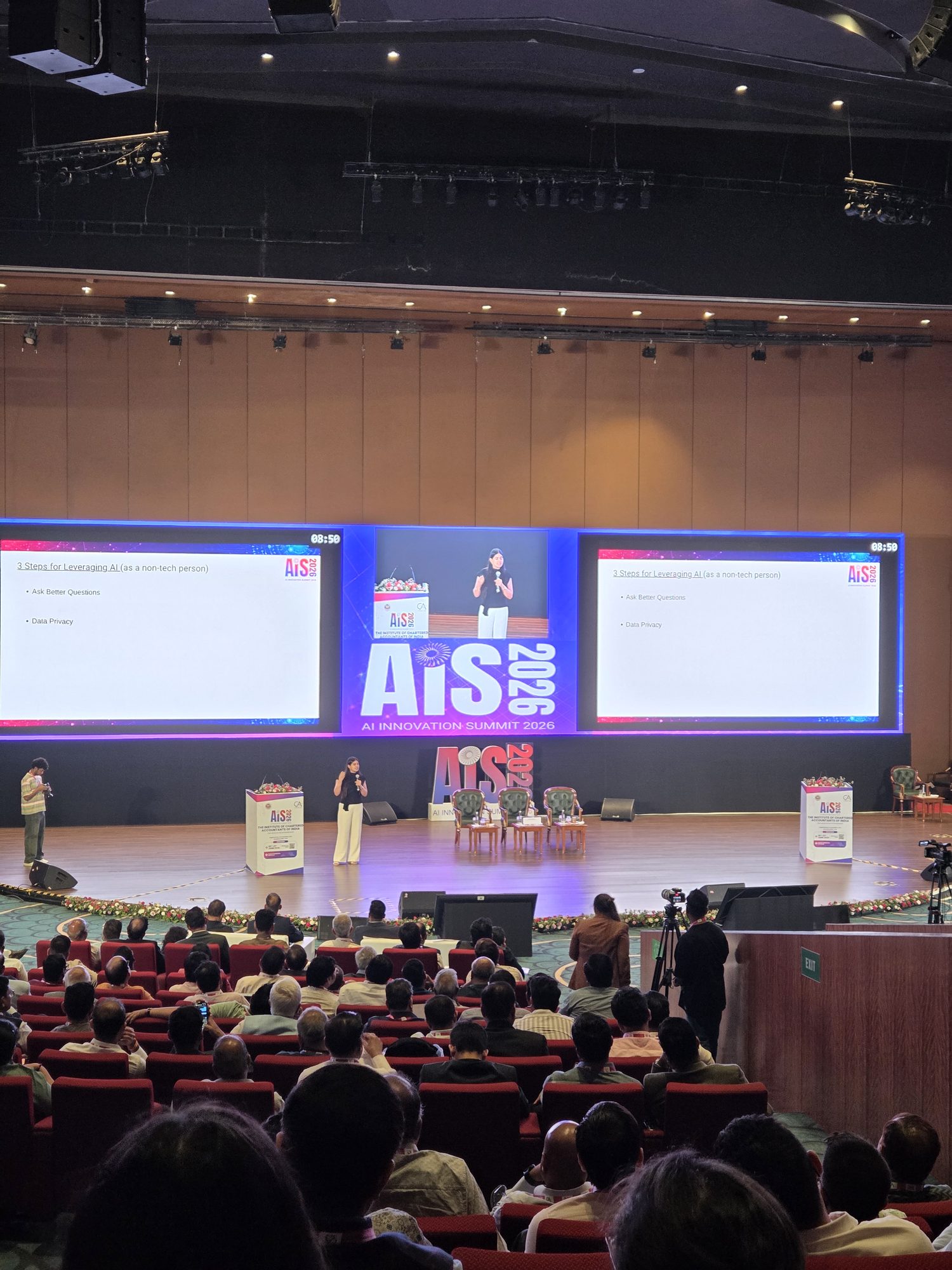
We spent two days this week at Bharat Mandapam for ICAI's AI Innovation Summit. Two full days of keynotes, demos, hallway conversations, and more "AI-powered" banners than we could count.
Here's the honest takeaway, and it surprised us: the profession isn't resisting AI. That old story — accountants as reluctant technology adopters — is out of date. The room was leaning in. Partners from firms of every size were asking sharp questions, booking demos, and genuinely trying to figure out where this fits. That energy is real, and it matters.
But underneath the energy, we noticed a gap. And it's the gap that will decide which firms actually benefit from the next few years, and which ones just spend money.
"AI" the label vs. AI the workflow
Walk any exhibition floor right now and almost everything wears the same badge. Rule-based automation? AI. A macro that moves data between two systems? AI. A dashboard with a chatbot bolted on? Also AI.
Some of it is the real thing. A lot of it isn't — it's automation that's existed for years, rebranded for the moment. That's not a criticism of the vendors so much as an observation about the noise. When everything is labeled the same way, the label stops telling you anything useful.
The firms that will win aren't the ones who buy the flashiest tool on the floor. They're the ones who can tell the difference — and who start from a completely different question.
The better first question
Most conversations at the summit started with the tool. "What does your product do?"
The more useful question runs the other way: "Where does the repetitive, high-volume work actually sit in your firm — and what would it be worth to take 60% of it off your team's plate?"
That's a workflow question, not a product question. And it changes everything downstream. Once you can see the workflow clearly, the right tool becomes obvious — or you find out you don't need a new tool at all, just a better sequence.
The unglamorous truth about leverage
Here's the part almost nobody puts on a keynote slide, because it doesn't sound impressive.
The highest-leverage place to apply AI in most accounting workflows is boring. It's document extraction — pulling clean, structured data out of the mountain of PDFs, scans, and statements that clients send in every form except the one you need. It's cleaning up the plumbing: the Tally exports, the reconciliations, the data that arrives in fourteen slightly-different shapes.
The impressive-sounding use cases — "AI that interprets tax treaties," "AI that does your audit" — make for great demos and terrible first projects. They're where the risk is highest and the accuracy is lowest. The boring stuff is where the hours actually go, and where a well-scoped tool pays for itself in weeks.
If we could hand every firm one takeaway from those two days, it would be this:
Start where the volume is, not where the marketing is.
Why we go in as outsiders
We don't come from a CA background, and at an event like this that sounds like a disadvantage. We've come to see it as the opposite.
Because we're not steeped in how the work has always been done, we look at a firm's process the way systems people do — as a set of workflows with inputs, bottlenecks, and repeated steps. We're not there to sell a product or to prove we know tax better than a partner who's done it for twenty years. We're there to map what's actually happening and find the two or three places where AI does real work.
That's the entire philosophy behind Building10X, and two days at Bharat Mandapam only sharpened our conviction in it.
Where this leaves the profession
Optimistic, is the short version. The appetite is there. The talent is there. What's missing — and what the noise on the exhibition floor obscures — is a calmer, more deliberate way of adopting this stuff. Map the workflow. Find the high-volume, repetitive task. Prove the value on a small, measurable slice before anyone signs anything big.
The firms that move that way won't have the most tools. They'll have the most leverage. And in a profession built on hours, leverage is the whole game.
Related from Building10X: Compliance Platform · Automation
We write these notes as builders — not vendors. At Building10X, we help businesses adopt AI the deliberate way: by starting with workflows, not product pitches. If any of this rhymed with what you're thinking about — in your firm or in your business — we'd like to hear it.
Start a conversation ↗